
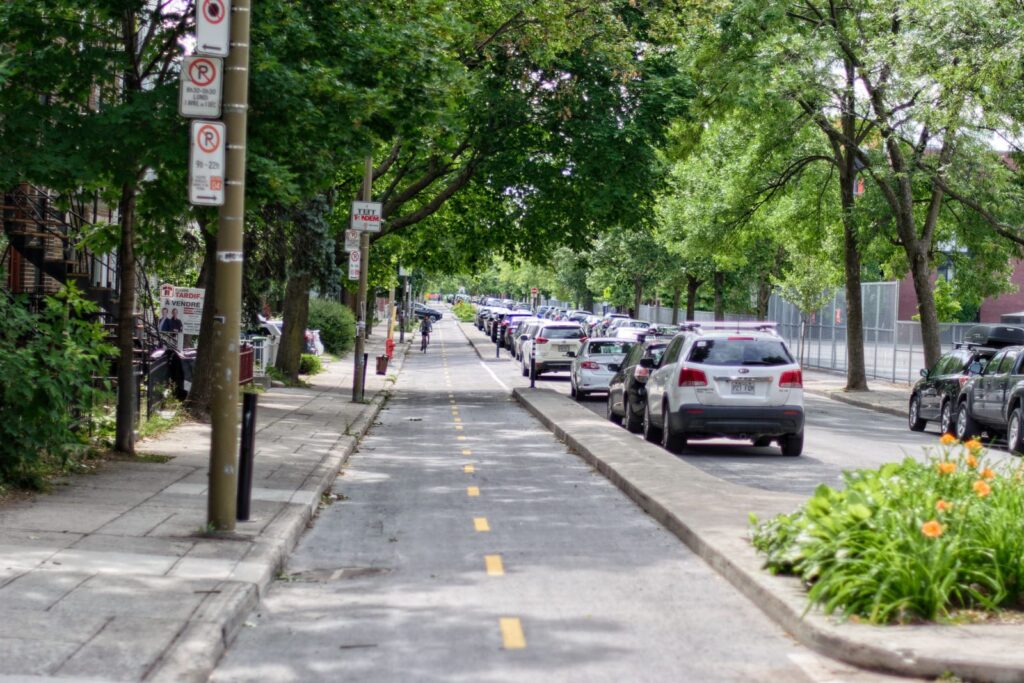
Few changes to a street provoke as much argument as a new cycle lane. Before it is built, the debate is about traffic chaos, lost parking and empty lanes. A few years later, on most of the routes that were built well, the argument has quietly moved on and the lane has become part of the furniture. What changed in between is worth understanding, because a cycle lane alters far more than who rides where.
A short London timeline
London’s modern cycling infrastructure is younger than it feels. In July 2010 the first two Cycle Superhighways opened as pilots: CS3 from Barking to Tower Hill and CS7 from Colliers Wood to Bank. Much of that early network was blue paint on the carriageway, and it did little to separate people on bikes from buses and lorries. In March 2013 City Hall announced a £1 billion programme for cycling, and the routes that followed, starting with the segregated east to west and north to south tracks through central London, were of a different kind: kerbed, continuous and physically separate from motor traffic.
Over the same period cycling in London grew substantially. Daily cycle journeys in Greater London roughly doubled between 2000 and 2012 to around 580,000, and then roughly doubled again by 2024 to about 1.3 million. Infrastructure is not the only reason, but the growth has been concentrated on the routes where good lanes were built.
Paint is not protection
The most important lesson of the last fifteen years is that the type of lane matters more than its existence. A painted advisory lane that vehicles can drive and park in provides little sense of safety, and people who do not already cycle confidently rarely start using it. A lane separated by a kerb, wands or a line of parked cars changes who is willing to ride: parents with children, older people, people on cargo bikes and adapted cycles.
That is also why well built lanes often look quiet in their first months and busy a few years later. Demand builds as people change habits, buy bikes, and discover that a journey they would have driven or taken by bus is quicker and more predictable on two wheels.
What changes for everyone else
A cycle lane is usually discussed as if it only affected cyclists and drivers. In practice it reshapes the whole street.
Pedestrians
A protected lane puts a buffer between the pavement and motor traffic, so people walking are further from the noise, the spray and the fumes. On many schemes the narrower carriageway and the kerb build-outs at junctions also shorten the distance pedestrians have to cross. There are real frictions too. Bus stop bypasses, where the cycle track runs behind the bus stop, require passengers to cross the track to board, and blind and partially sighted people have raised legitimate concerns about them. The better designs use zebra markings across the track, raised crossings and clear tactile paving, and the design standards have been revised as a result.
Buses and deliveries
Loading is the practical question most often underestimated. Shops and restaurants need deliveries, and a continuous kerbed lane with no loading provision pushes lorries onto side streets or into the bus lane. Good schemes plan loading bays, timed loading windows and access for disabled drivers from the start rather than retrofitting them after complaints.
Traffic
The fear that reallocating road space will cause permanent gridlock is understandable and has not, broadly, been borne out. Some traffic reassigns to other routes, some trips shift mode, and some trips are simply not made. Where lanes are part of wider traffic reduction, the effect on local streets can be large. Across 46 low traffic neighbourhoods studied in London, motor traffic inside the areas roughly halved, with little change on average on the boundary roads.
The effect on high streets
Retailers are frequently the most anxious opponents of new lanes, because they assume most of their customers arrive by car. Surveys in London and elsewhere have repeatedly found that shopkeepers overestimate how many customers drive, and underestimate how many walk, cycle or come by bus. People on foot and on bikes tend to spend less per visit but visit more often, and a street that is pleasant to linger in keeps them longer.
This does not mean every lane helps every shop. A business that depends on bulky purchases or trade customers with vans has real needs that a design must meet. But the blanket assumption that removing parking kills a high street is not supported by the evidence, and the busiest shopping streets in London have little or no kerbside parking at all.
What makes a lane work
- Continuity. A lane that disappears at the difficult junction is not a route. The junction is exactly where protection is most needed.
- Width. Enough to overtake safely and to accommodate cargo bikes and adapted cycles, which are wider than a standard bicycle.
- A network, not a line. One excellent route helps the people who live along it. A connected grid, with quieter side streets linking into the main routes, is what changes behaviour across a district.
- Loading and access designed in. Deliveries, blue badge parking and taxi drop-off need a place, or they will take one.
- Attention to the pavement. A cycle lane should never be paid for by narrowing the footway.
The street a few years later
Walk along one of the older segregated routes today and the most striking thing is how ordinary it has become. Commuters at rush hour, children on the way to school on Saturday morning, delivery riders at lunchtime. The street carries more people than it did, in less space, with less noise.
The more interesting changes are harder to see. Streets with lower traffic and more people on bikes and on foot tend to support more of the small ground-floor businesses that depend on passing trade, a theme we have explored in relation to how ground floors work. A cycle lane is, in the end, a decision about who a street is for. The best ones answer that question with “more people”, not “different people”.